
The Frontières de l’Innovation en Recherche et Éducation (FIRE) Doctoral School is an international and interdisciplinary PhD program accredited by the Université Paris Cité (UPCité) and co-accredited by the Université Paris Sciences et Lettres (PSL).
FIRE welcomes students who are passionate about contributing to Planetary Health and the implementation of the Sustainable Development Goals (SDGs). It hosts research projects that often fall outside the scope of traditional doctoral schools due to their unconventional and cross-disciplinary nature. We interviewed three of our PhD students, who shared their thesis topics, explained why they chose the FIRE doctoral school, and offered advice for the next cohort.

From left to right: Milena Milovanović, Stéphanie Fanfan and Chloé Anna Höllerer
Chloé Anna Höllerer, 1st Year PhD student FIRE
Background: Diplôme d’Ingénieur Agronome (Agronomic Engineering degree) – specialization BMC at Institut Agro – Campus Rennes; Master M2 in Molecular and Cellular Biology, co-accreditaded by Institut Agro Campus Rennes and Universite de Rennes 1
Lab 1: Phytogenomics, Institut de Biologie de l’École Normale Supérieure – IBENS,École normale Supérieure
Lab 2: Quantitative Ocean Biogeochemistry, Dept. of Earth, Ocean and Ecological Sciences,University of Liverpool
“Iron limitation in the Southern Ocean has been well documented over the past decades. However, we are increasingly discovering that manganese may also limit phytoplankton growth at the same time. This simultaneous “co-limitation” could have important consequences for phytoplankton communities and ocean productivity. (…) My PhD addresses exactly this question: how do Antarctic phytoplankton respond, at the molecular and community level, to iron and manganese availability?
The idea of doing a PhD alongside other students coming from very different disciplines, but who are all working on questions related to planetary health, really interested me. This type of environment creates opportunities to regularly meet, exchange perspectives, and learn from approaches that are different from your own. Since the cohort progresses through the programme together, it also builds a real sense of community and support, which I think is very valuable during a PhD. (…) Another aspect I really value is that FIRE connects research with actors outside academia, such as policy makers or associations. (…) Overall, I feel very supported within the FIRE programme, which is especially important at the beginning of a PhD. The financial support from the programme also gives me flexibility that I wouldn’t otherwise have, and allows me to invest in opportunities such as conferences or additional training.
I think FIRE is a really good fit for people who are curious and open-minded, and who are genuinely interested in interdisciplinarity, not only within their own research, but also in learning from very different fields.“
Read the full article here
Stéphanie Fanfan, 2nd Year PhD student FIRE
Background: Master Social Intervention & Development at Toulouse Jean Jaurès; Master Of Business Administration at International School of Management New York; Master Marketing & Communication at ISEG Bordeaux-Paris
Lab 1: Centre Max Weber, Université Lyon 2
Lab 2: John Jay College of Criminal Justice, New York
“My research examines a deceptively simple question: Why do reintegration policies often fail incarcerated people (specifically women), even when prison education and vocational training are provided? (…) Women’s pathways in and out of prison are shaped by gender inequality, economic precarity, racialization, violence, caregiving responsibilities, and unequal access to social networks. Education alone cannot compensate for structural barriers if institutions do not address the broader distribution of opportunity and recognition. (…) In simpler terms: rather than asking “Does training work?”, I ask: How must reintegration policy be redesigned to account for inequality, gendered experiences, and institutional power? (…) Because reintegration is not just about employment. It is about how societies decide who is allowed to return, under what conditions, and with what support. If institutions focus only on individual responsibility while ignoring structural inequality, they risk reproducing exclusion under the language of opportunity.
Academia can be rigid. I needed a space where my activism and my intellectual rigor weren’t merely tolerated but genuinely valued. I needed to be surrounded by people committed to change, unafraid to challenge dominant paradigms. And also? When the PhD opened, two friends already in the school reached out immediately and said, “This is you.” That mattered. It felt like being recognized and not reshaped. So, here I am !
This is the first time I’ve encountered an institution where “interdisciplinary” isn’t just a polished word on a brochure, but an operational reality. (…) Today, the research I’m conducting is something I’m immensely proud of, but it’s also strategically stronger, more transferable, and more impactful because it now speaks to academia, to policymakers, and to practitioners. (…) FIRE’s international dimension also shifted my scale of thinking. My work is no longer confined to a single national context. I collaborate across borders, across sectors, across epistemologies. (…) That evolution happened because FIRE didn’t ask me to shrink my vision but rather gave me the structure and intellectual ecosystem to expand it responsibly.
LPI and FIRE don’t need clones. It needs thinkers who can build bridges where others see walls. And maybe, just now, if you’ve always felt “in between,” you might finally realize that’s exactly where innovation happens.“
Read the full article here
Milena Milovanović, 2nd Year PhD student FIRE
Background: MSc in Interdisciplinary Approaches in Life Sciences, Université Paris Cité; BSc in Molecular Biology and Physiology, Faculty of Biology, University of Belgrade, Serbia
Lab 1: ELiS labs, Sorbonne Université
Lab 2: Laboratoire Jean Perrin, Sorbonne Université
“The title of my thesis is “Genotype-Phenotype Linkage of Bacteriophages Independent of Cellular Compartmentalization”, and it investigates one of the most fundamental questions in biology: how does a virus “know” which proteins belong to it? (…) A surprising recent finding from my lab changed this picture. When phages were assembled entirely outside a cell – using a test-tube system called PHEIGES (PHage Engineering by In vitro Gene Expression and Selection), developed in collaboration with the lab of Vincent Noireaux (University of Minnesota Twin Cities) – phages still matched their own DNA to their own proteins, even without a cell to confine them. This challenges the dogma. (…) Although this project tackles questions of fundamental science, understanding the underlying mechanisms could have implications for biotechnology and medicine, including phage therapy for antibiotic-resistant infections and improving next-generation protein selection platforms used in drug discovery.
The most formative aspect of FIRE to date has been the attentiveness. I sincerely appreciate how tightly-knit and human-scale our community is. Because the cohort is small, the team knows each student individually, and each teacher can sense and adapt to us promptly. Every question that crossed my mind has been answered.
Very few of my colleagues – myself included – comfortably conform to the standard definition of any field. For most of academia this is a liability, but FIRE treats it as a qualification. In short, I would say that the programme is meant for risk-takers. (…) If you see yourself conducting research which is transgressive, crossing boundaries and challenging paradigms, and ultimately moving from the lab / office to real world, then this could be a march.“
Read the full article here
Application deadline: April 3rd, 2026
Application link here.
For more information, contact: firephd@learningplanetinstitute.org
Read more

FIRE PhD: A Retreat to Disconnect and Reconnect
From June 22 to 25, the PhD students of the FIRE Doctoral School at EURIP organized their annual retreat in Saint-Malo. This getaway is much more than a break from research, it is a key moment, designed by the PhD students themselves, to build a connected doctoral...

From Paris to London: AIRE students take part in the University College London (UCL) Ideas Sprint
Eight students from the AIRE Master's programme, funded by EURIP, participated in the UCL Ideas Sprint, a social hackathon held on June 10th and hosted by the Students' Union at University College London (UCL). The eight participants from the AIRE Master’s programme...
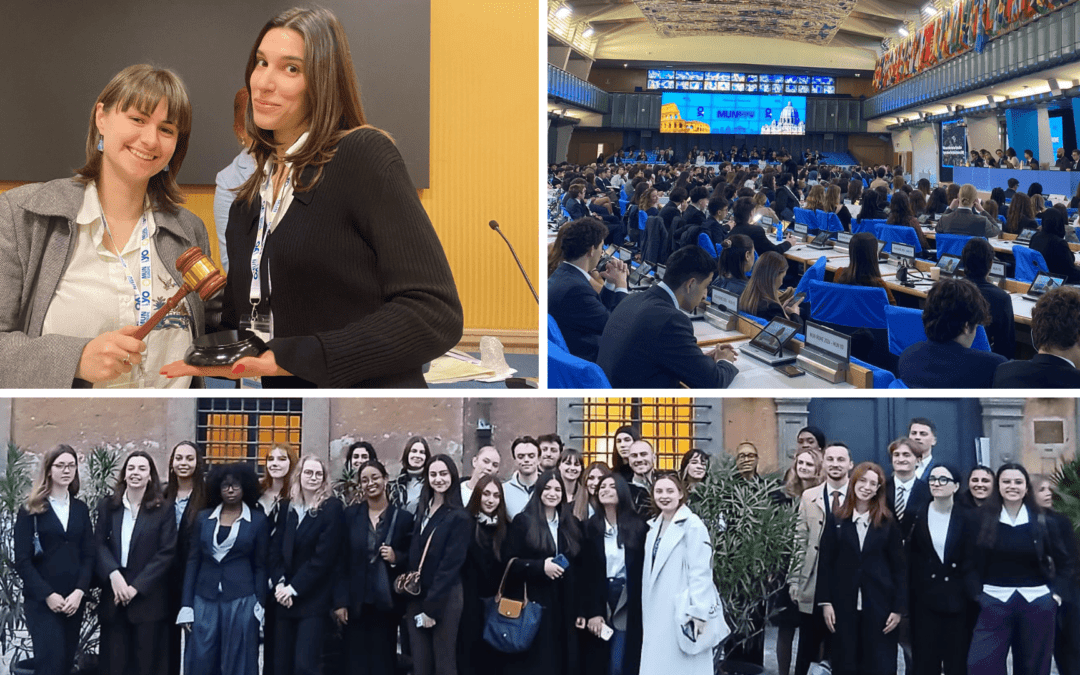
Two EURIP students share their experience as part of the Circle U. delegation at the Model United Nations (MUN) in Rome
Two students from the EURIP Graduate School's Master AIRE programme, Zoja Savic and Jackie Landi, took part in the Circle U. delegation for a Model United Nations (MUN) in Rome. They had an incredible experience and warmly recommend participating in Circle U....

Applications to the EURIP Graduate School 2026 are open!
If you’re curious, eager to cross disciplinary boundaries, and passionate about the major challenges facing our world, the EURIP Graduate School is for you. Hosted by the Learning Planet Institute and co-accredited by Université Paris Cité and Université PSL, EURIP...